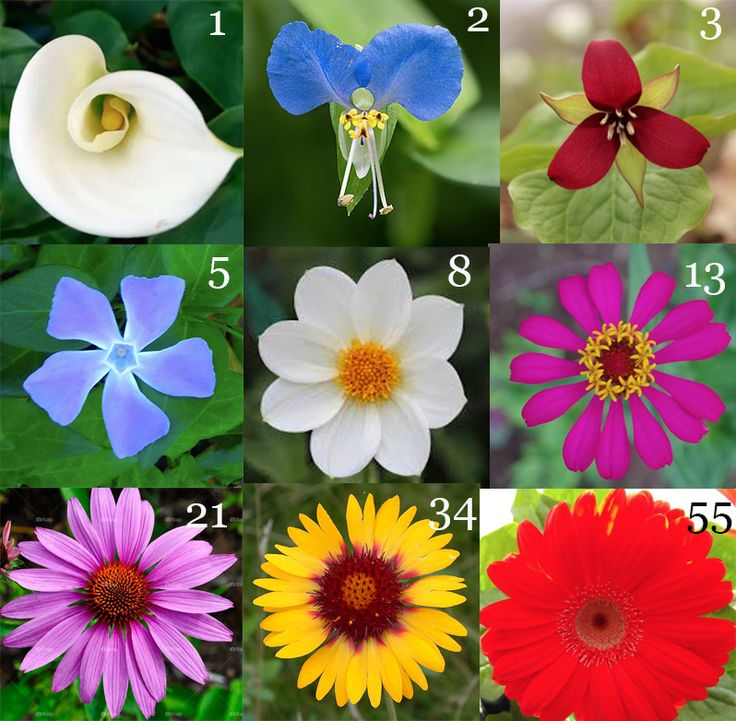
Ever find yourself scrolling through TikTok or YouTube and stumbling across a beautifully shot video about the patterns of nature? More often than not, these videos build up to a climax that feels both deeply spiritual and profoundly scientific: “God is a mathematician, and the Fibonacci sequence is His signature.”
To back this up, they will show you stunning visuals of flower petals, nautilus shells, or swirling hurricanes, claiming they all perfectly follow a single mathematical formula. For the casual viewer, it’s easy to jump to a massive generalization—assuming that every flower on Earth is strictly hardwired to have 3, 5, 8, or 13 petals, and that there is simply no room for a 4 or a 6 in nature’s design.
Unfortunately, this sweeping simplification creates a whole new misunderstanding. When you look closer, there is a mix of distorted history, oversimplified biology, and flawed philosophy that needs to be untangled.
Rewinding History: The Cross-Cultural Roots of Liber Abaci
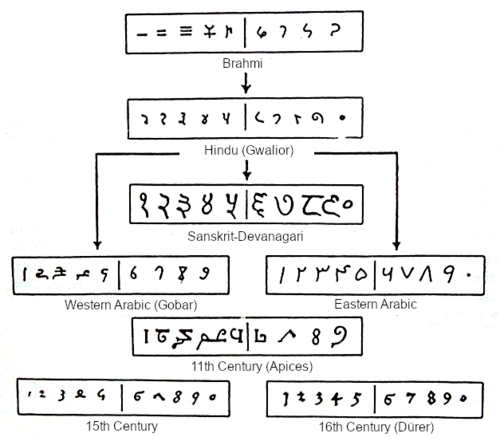
Before we look at the patterns in nature, we need to take a step back to the 13th century. The man we know as Leonardo of Pisa—later nicknamed Fibonacci—never actually claimed to have invented this sequence out of thin air.
As the son of an Italian customs official, Fibonacci spent his youth in Bugia (modern-day Algeria). It was there, in North Africa, that he learned a system of numbering that was vastly superior to the clumsy Roman numerals used in Europe. This system actually traced back to ancient thinkers in India, which was later adopted, refined, and spread by mathematicians across the Islamic world—becoming known to the West as Arabic numerals, or more accurately today, the Hindu-Arabic numeral system.
When he returned to Italy, Fibonacci published his groundbreaking book, Liber Abaci (The Book of Calculation), in 1202. This was the book that introduced the modern numbering system (0, 1, 2, 3…) to the Western world. As for the famous sequence that now bears his name:
1, 1, 2, 3, 5, 8, 13, 21, 34, 55 … etc
It was actually introduced as a fictional word problem about a hypothetical rabbit population, used purely to show off how practical and easy the new numbering system was. Fibonacci himself never predicted that people would one day treat his sequence as a mystical blueprint for the entire universe.
Field Biology vs. Social Media Cherry-Picking
The biggest issue with popular science content today is “cherry-picking”—highlighting only the data that fits the theory while ignoring the massive amount of evidence that contradicts it.
Content creators love to showcase lilies (3 petals), buttercups (5 petals), or delphiniums (8 petals) as ultimate proof of the Fibonacci sequence. Because of this, viewers walk away believing nature operates like a rigid digital machine.
But if we separate social media hype from actual field biology, we find that morphological variety is a fundamental characteristic of the plant world:
- Flowers in the Cruciferae family (like mustard, radish, and cabbage greens) consistently bloom with 4 petals.
- The Lilaceae family (like tulips and amaryllis) very often grow in symmetrical structures that display 6 petals.
- Plenty of fuchsia species, poppies, and desert plants thrive with even-numbered petals that completely ignore the Fibonacci lineup.
In short, nature doesn’t run a strict background check before blooming just to make sure its petals match a page in Liber Abaci.
The Mechanics of Phyllotaxis: Efficiency, Not Magic
So, why does the Fibonacci sequence show up so frequently in certain plant structures, like the spirals of a sunflower head, the scales of a pineapple, or the ridges of a pinecone?
In biology, this isn’t a mystical coincidence; it is the result of a physical growth process called Phyllotaxis. Plants grow new parts (like leaves or seeds) from a cluster of stem cells at the very tip of their shoots, known as the apical meristem. To keep these new parts from overlapping, to ensure leaves don’t block sunlight from reaching the ones below them, and to pack seeds as tightly as possible, the plant’s hormonal and physical growth naturally forms a spiral pattern.
Mathematically speaking, the most efficient rotation angle to prevent crowding is roughly 137.5 degrees (known as the Golden Angle). When plant cells grow according to these basic laws of physics and biochemistry, the resulting pattern automatically mimics the Golden Ratio and the Fibonacci sequence. The plant isn’t doing math; it is simply responding to the laws of energy and spatial efficiency.
A Philosophical Shift: Order Without Reductionism
Many great scientists and theologians throughout history—from Galileo Galilei and Johannes Kepler to Paul Dirac—have famously said that mathematics is the language of the universe. It’s a beautiful metaphor, and it holds a lot of truth when you are admiring the deep sense of order hidden within the chaos of the cosmos.
The mistake happens when we take that metaphor to an extreme conclusion: acting as though the universe is trapped by, and must obey, a single mathematical formula discovered by humans.
God cannot be reduced to a rigid mathematician. The math we discover is a tool humans invented to read patterns, not a cage that limits the creative freedom of the Creator. If we only view the architecture of nature through the narrow lens of a single numerical sequence like Fibonacci, we end up missing the sheer scale of the natural world.
When spatial efficiency requires a spiral, nature gives us the elegance of the Fibonacci sequence. But when a symmetrical structure or a different functional need takes over, nature switches to a 4, a 6, or a breathtaking fractal geometry that is just as stunning.
Conclusion
The Fibonacci sequence is an incredible window into how mechanical order shows up in living biology. However, trying to force a narrative that the entire universe must bow to the sequence of $1, 1, 2, 3, 5, 8 \dots$ is an oversimplification that ignores scientific reality.
The universe cannot be fully explained by a single mathematical model. The real beauty of our world lies in its dynamic diversity. In the vast garden of life, there is a perfectly valid place for numbers like 3 and 5, but there is an equally precise and beautiful space for 4 and 6. Nature is an adaptive masterpiece, not a static spreadsheet.